Kale
SCOTTISH ROMANCE: My Sinful Surrender to a Highlander Werewolf (Scottish Werewolf Pregnancy Romance) (Historical Medieval Shape Shifter Paranormal Science Fiction Short Stories)Kale is the werewolf leader whose demand for Valerie exposes the coercive logic governing the conflict between the werewolf and vampire communities. He treats Valerie not as an autonomous woman choosing her own attachment, but as the promised bride of his son and therefore as someone his group has the right to reclaim. His appearance at John’s home converts a tense interspecies dispute into an immediate threat of violence and forces John to choose between negotiation and defense.
Identity and Introduction
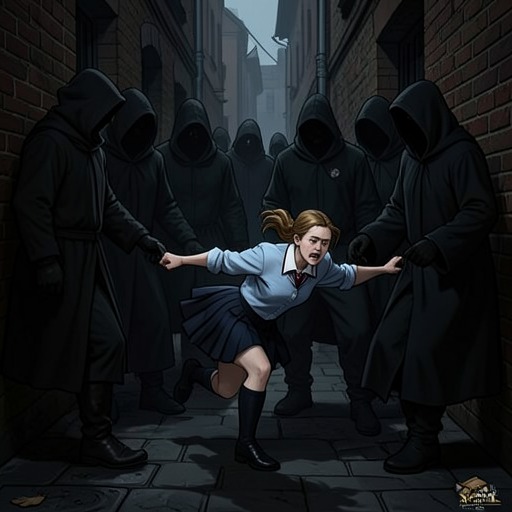
Kale enters the episode through the alarm raised by Melonius, who reports that wolves and their enforcers are gathered outside the door and that their leader wants a meeting with John. The size of the delegation matters: the wolves do not arrive as private petitioners but as a collective force capable of making the confrontation “a bloody mess.” Kale therefore carries both personal authority and the institutional power of the werewolf group.
John agrees to meet him without guards from either side, but specifically orders that Valerie be protected. That arrangement establishes Kale as a potential physical danger even before he appears. Kale then enters abruptly, saunters into the study, slams the door in Melonius’s face, and confronts John. His manner is not conciliatory. He immediately identifies the issue as possession, telling John that John has his son’s bride-to-be.
Claim to Valerie and Conflict with John
Kale rejects ordinary courtesy and refuses to let the meeting become a diplomatic exchange. When John acknowledges that he knows who Kale is and asks how he has been, Kale dismisses the greeting and demands the girl. The contrast between John’s attempt at controlled familiarity and Kale’s blunt command defines their opposing positions: John frames the encounter as a negotiation, while Kale frames it as the enforcement of an existing right.
The conflict becomes physical when Kale moves toward Valerie. John instinctively places himself between them, and the protective gesture is followed by a supernatural warning: John’s eyes flash red and his fangs emerge as he tells Kale not to approach her. Kale’s presence thus activates John’s transformation from host and negotiator into defender. The scene’s danger is not abstract; the two men stand close enough that a single further movement could turn the dispute into violence.
Kale nevertheless treats John’s defense of Valerie as evidence of betrayal. He asks Valerie whether this is the arrangement now: the vampires saved her, and she has joined their side. His accusation reduces her change of allegiance to a rejection of the wolves, while also presenting the rescue as something that should have created an obligation to return. Kale’s language reveals a worldview in which protection generates claims and affiliation is measured through loyalty to the group rather than through personal consent.
Beliefs About Marriage and Mating
Kale’s most revealing statement concerns what his son supposedly needs. Valerie says that his son deserves a woman who loves him, but Kale answers that the son needs pups and a wife and does not need to worry about love. The opposition is exact: Valerie defines marriage through mutual feeling, whereas Kale defines it through reproduction and social function.
This belief explains why Kale can call Valerie a bride-to-be even as she rejects the relationship. For him, the intended marriage is validated by its place within werewolf succession and family structure, not by Valerie’s emotional choice. His anger rises because her refusal challenges more than a private arrangement; it challenges the authority of the system he represents. The demand for her return is consequently both a retrieval attempt and an effort to restore the hierarchy that made her a designated bride.
Kale’s response also places him in opposition to John’s emerging protectiveness. Melonius is shocked that John may love Valerie, and John’s body confirms that he is prepared to defend her. Kale, by contrast, treats love as irrelevant beside the production of offspring and the maintenance of a wife’s role. The confrontation therefore stages competing definitions of partnership: chosen attachment on one side, prescribed reproductive duty on the other.
Relationships and Narrative Role
Kale’s immediate relationship to Valerie is adversarial and possessive. He approaches her as the woman promised to his son and demands an explanation for her refusal, but he does not offer evidence that her wishes have any authority. Valerie answers apologetically, saying that his son deserves someone who loves him; even this measured response is met not with reflection but with a sharper insistence on pups and marriage.
His relationship with John is similarly structured by rivalry. Kale sees John as the vampire who has taken possession of, or at least sheltered, the woman belonging to the werewolf side. John sees Kale as a threat from whom Valerie must be shielded. Their confrontation gathers the wider vampire-werewolf conflict into a single room, where a door, a guarded woman, and the bodies of two supernatural leaders make political hostility intimate and immediate.
Kale functions as a threshold figure in the plot: his arrival brings the external wolf conflict to John’s study and tests whether Valerie can remain within the protection of a different community. He is not presented as a detached messenger. His entrance, command, accusation, and movement toward Valerie make him the active agent of the claim, while the wolves and their enforcers supply the pressure behind him.
Change and Significance
The supplied episode does not show Kale abandoning his demand, accepting Valerie’s choice, or reaching a peaceful settlement. Instead, it ends with his anger intensifying after Valerie explicitly places love above the arranged role. His position remains fixed: the son requires a wife and offspring, and Valerie is expected to fulfill that function. The absence of reconciliation is itself significant, because it leaves the conflict suspended between John’s protective resistance and Kale’s insistence that tradition and reproduction override consent.
Kale’s importance lies in how clearly he articulates the ideology driving the confrontation. He gives voice to a social order in which a bride can be claimed by a family and a woman’s value can be reduced to her capacity to provide pups. Against that order, Valerie’s appeal to love and John’s bodily defense establish alternative forms of belonging. Kale is therefore both a character and a pressure point: his demand forces the story to ask whether rescue creates ownership, whether group loyalty can supersede individual choice, and whether a marriage recognized by a community has any legitimacy when the proposed bride refuses it.